Behind the Bar: A Guide to Bartender Lingo

Stepping behind the bar for the first time can feel like entering a whole new world, and that world has its own language. At National Bartending School, we train our students not only in the art of mixing drinks, but also in the vocabulary that keeps the bar running smoothly. Whether you’re just starting out or brushing up your skills, here’s a rundown of bartender lingo every aspiring mixologist should know.
1. 86’d
When an item is out of stock or no longer available, it’s been “86’d.” This could apply to anything from a specific liquor to a menu item. For example, “We’re 86’d on Jameson tonight.”
2. On the Rocks
This one’s for the customers too. Ordering a drink “on the rocks” means it’s served over ice. Simple, clean, and cool.
3. Neat
A drink served “neat” means it’s poured straight from the bottle into the glass with no ice, no mixers, and no chilling. Whiskey is commonly ordered this way by those who like it pure and unadulterated.
4. Up
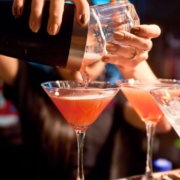
When someone asks for a cocktail served “up,” they want it shaken or stirred with ice and then strained into a stemmed glass without ice. Think martinis and Manhattans.
5. Dirty
Ordering a cocktail “dirty” means adding olive brine. This term is most commonly used with martinis. The more brine, the dirtier the drink.
6. Back
A “back” is a small side drink served with a stronger one. A customer might ask for a whiskey with a water back, or a beer with a shot and a soda back.
7. Well Drink
A “well drink” uses the house liquor kept in the speed rail, also known as the “well.” These are your go-to spirits for mixed drinks unless a customer requests a specific brand.
8. Call Drink
This is when a customer requests a specific brand of liquor for their drink. For example, “Captain and Coke” or “Tanqueray and tonic.”
9. Top Shelf / Premium
These are the higher-end liquors kept on the top shelf of the bar. They’re more expensive and often requested by name for their quality and flavor profile.
10. Muddle
To “muddle” is to crush ingredients like mint, fruit, or sugar at the bottom of a glass to release flavors. It’s an essential step in making drinks like a Mojito or Old Fashioned.
11. Float
A “float” refers to gently pouring a spirit on top of a drink so it sits on the surface. It’s often done with dark rum in drinks like the Mai Tai or with liqueurs to create layered shots.
12. Shaken vs. Stirred
Yes, James Bond made this debate famous. Shaking is used when a drink contains citrus or other ingredients that need vigorous mixing. Stirring is reserved for spirit-forward drinks to keep them clear and smooth.
13. Flash Blend
This is a quick blend used to mix ingredients without creating a full-on frozen drink. It’s great for daiquiris and margaritas when you want a quick chill but don’t need a slush.
14. Dry / Extra Dry
This lingo is often used for martinis. A “dry” martini has less vermouth. An “extra dry” one may have barely any at all — sometimes just a rinse or a whisper of it.
15. Behind!
One of the most shouted words behind a busy bar. Saying “Behind!” alerts your coworkers that you’re moving behind them, helping avoid spills or collisions.
Talk the Talk. Walk the Walk.
Learning bartender lingo is more than just memorizing phrases. It’s about moving confidently and communicating clearly in a fast-paced environment. Knowing the language helps you work efficiently, take accurate orders, and sound like a pro.
At National Bartending School, we teach all of this and more. From mastering mixology to building customer rapport, we prepare you for every challenge behind the bar, no guesswork needed.
Ready to speak fluent bartender? Come see what our classes can offer. Cheers!